
SF Digital Equity Plan
Today, one in three San Franciscans is either over the age of 60 or living with a disability — and many are at risk of digital exclusion in a city that runs online.
The Digital Equity Plan for Older Adults & Adults with Disabilities, released by the SF Tech Council in 2024, reveals a powerful and urgent truth: while 91% of older adults and people with disabilities now have broadband access — a dramatic increase from less than 50–60% in 2014 — access alone isn’t enough.
Behind the numbers lies a deeper digital divide.
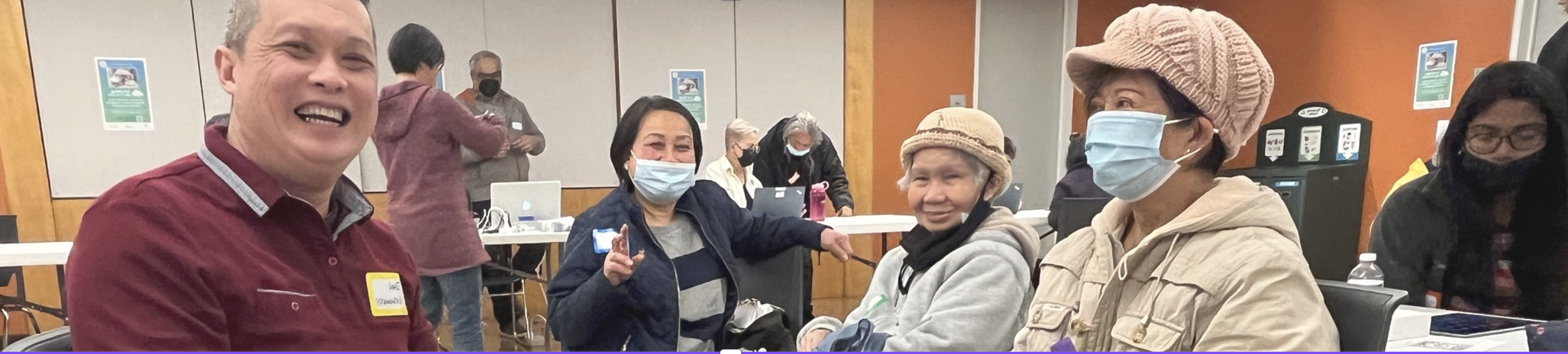
Tech Support Popup at SF Public Library
The Hidden Gaps
There are approximately 530 single-room occupancy (SRO) buildings in San Francisco housing about 22,000 residents, many without reliable in-unit internet access
In Chinatown, less than half of residents have a broadband plan .
33.3% of people with disabilities in San Francisco live below the poverty line, double the rate of those without disabilities .
For many residents, barriers go beyond affordability. Language gaps, fear of scams, outdated devices, inaccessible housing infrastructure, and a lack of culturally competent tech support prevent full participation in today’s digital world.
Nearly half of San Franciscans age 60+ speak a primary language other than English — yet many digital services are only available in English or Spanish.
Community Organizations Are Stepping Up — But They Need Support
95% of surveyed organizations say digital equity is core to their mission .
88% provide digital literacy training .
Many now offer services in Chinese, Spanish, Russian, Tagalog, and Vietnamese .
Still, short-term funding, staffing shortages, and burnout threaten sustainability.
What Works? Digital Navigators.
The plan highlights a proven solution: trusted, community-based Digital Navigators who provide one-on-one, culturally competent support — helping older adults set up devices, apply for benefits, access telehealth, and stay connected to family and community .
Because being connected today means:
Accessing healthcare
Applying for housing
Receiving public benefits
Avoiding social isolation
Participating in civic life
The Bottom Line
San Francisco has made real progress — but digital equity requires more than infrastructure. It demands coordinated policy, sustainable funding, device access, multilingual support, and human-centered training.
As the report makes clear: Being connected is no longer a privilege — it’s a human right.
Read the full plan and join the movement to ensure every older adult and person with a disability can fully participate in San Francisco’s connected future.